Portrait by Matthew Stone.
Matthew Stone and friends interview Catherine Borra.Matthew Stone: What is most important to you?
I don't know, it depends on what level you are asking! I think there is no one single thing but big groups (or symbols) of values/objects/behaviours and people reflecting into each other that I put together and love. Among these, I think the most important for me is blood.
MS: What do you have faith in?
I believe that people will always go forwards, and even if sometimes it seems that all energy has gone and that this is "the endpoint of mankind's ideological evolution" (Francis Fukuyama), I have faith in cycles and I know that it is going to change again.
Sometimes, though, I don't believe it at all.
Todd Hart: What's the best example of Art really changing the world for the better?
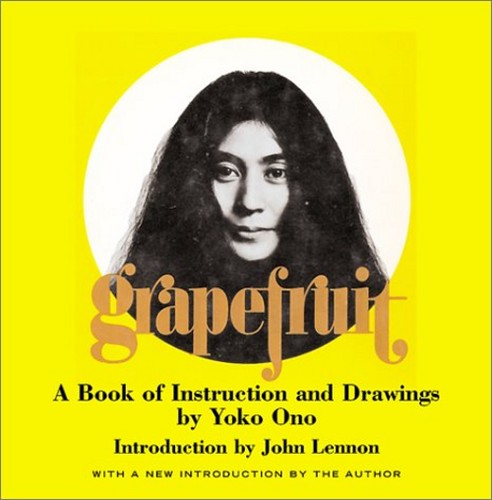
One kind (I don't know if it's the BEST example) of art that I think can change the world is Jiri Kovanda's series of slight and persevering actions, aimed to reach that space in between invisibility, memory and oddness - or everyday surrealism, and Yoko Ono's Grapefruit book as well as other of her works. This is because it's important to me to revive faith, even just for the sake of it, and creativity as a consequence of it; because faith is an extremely important factor of life although currently tends to be discarded.
I believe that art should be active for change now, but I'm not so sure that 'propaganda' works and that it allows the freedom of language that art making deserves - every discipline has its own field of action, and given that art isn't one, it shouldn't have one in particular...


Image courtesy of http://static.flickr.com/122/288558640_70ee35d340.jpg
 Image courtesy of http://www.socialeast.org/Images/JiriKovanda,19.11.1976.jpg
Image courtesy of http://www.frieze.com/images/middle/kiss.jpg.
Norman Rosenthal: Why are we alive at all? It is after all a very strange state to find ourselves in.
I've just finished reading a book by J.G. Ballard, one of his catastrophe series about a drowned world (The Drowned World, so to reference it). Time and space after it, seem to be an even more relative set of dimensions to rely upon, because being alive involves an immediacy between past and future that can just not be grasped (by me, at least). In his book, he depicts these human beings that are undergoing the process of rotating their memory so that, because of the environment they are living in, their immediate recollections - or their most recent past, is the revival of their biological memory from millions of years ago, leading to face regression as a prospective and almost as an acknowledged aim. This crashes the present time of subjectivity to something totally irrelevant in the face of the universe and of the infinity of misperception - I highly doubt that we can state with precision that we are alive at all!
Iphgenia Baal: What is the one thing about you that undermines all the opinions you have made above?
They aren't opinions, it's true! All, apart from the question regarding the best example of Art really changing the world for the better, and the one about being alive (that is a confusing subject anyway).
MS: What question should be added to this list?
Out of all the possible languages (English, Latin, Spanish, visual, sign, irony, empathy, facial expressions, music, archetypes etc.) available on this earth, which one do you feel you express/would express yourself better in, and why?
---all images supplied by Catherine---